By Rebecca Kanthor
CORRESPONDENT
Published: November 10, 2014 4:48 pm ET
Updated: November 10, 2014 4:51 pm ET
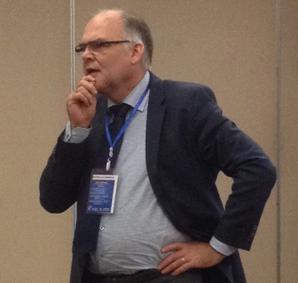
Image By: Plastics News/Rebecca Kanthor
European delegation head Francis Huysman of VAL-I-PAC
BEIJING — Sitting across from each other in a Beijing hotel meeting room, representatives of the European Association of Plastics Recycling and Recovery Organizations (EPRO) and members of the Plastic Recycling Committee of China Plastics Processing Industry Association (PRCCPIA) met for the Oct. 10 Sino-EU Cooperation Seminar of the Plastics Recycling Industry.
The European delegation, comprised of non-profit organizations from European Union member states, described their trip to China as a fact-finding mission to get more information about what’s going on in recycling in China. The rest of their several-day visit will comprise of visits to waste plastics recovery and recycling companies in Fujian, Tianjin and Shanghai, as well as a meeting with China Scrap Plastics Association Executive President Steve Wong.
While the morning began with some stiff PowerPoint presentations and very little back and forth, by the end of the summit, both sides felt more free to ask direct questions and address pressing concerns. Whether they received direct answers is another story, but the small scale of the summit allowed for an unusual amount of back and forth dialogue and debate between members.
On the EU side of things, the EPRO delegation had news about target increases for plastics packaging recycling in Europe. EU members, especially Germany, the fourth largest supplier to China of waste plastics worldwide and the largest European supplier, will have to reach for some “very big” recycling targets in the coming years.
Currently the recycling target for consumer plastic packaging is 22.5 percent, but the volume will double by 2020 and nearly triple by 2030. Geraud Delorme of French organization Valorplas acknowledged during his presentation that some member states find the targets too high and hard to achieve. He also brought attention to the fact that the current targets do not account for the sometimes large quantity of impurities in the scrap plastic. “This is very important,” he said, “how do we calculate?”
The delegation also used the opportunity to introduce EUCertPlas, a new certification system for waste plastic suppliers and producers that is being rolled out throughout the EU from this year.
“Traceability is key,” said Ann Vossen of Belgium’s FOST Plus, who introduced the certification to the group as a way to make a “fair level playing field” in Europe. “We want full traceability from input to output.” Currently out of 1,000 companies dealing with waste plastic in Europe only 83 have been audited for the certification, but the delegation was positive that more would do so soon, and they encouraged the Chinese representatives to apply for the certification as well.
The Chinese attendees were quick to ask, “How much will it cost?” But they did not get a clear answer on that because the price will depend on which auditor the company chooses to use. The delegation did acknowledge that the problem remains that not every European country has adopted this certification, so Chinese companies may still have to double up and be certified by EUCertPlas as well as by individual countries that have not adopted it yet. The certification is also currently only for waste plastic, but the delegation said that there is a possibility it will expand to other waste materials.
Chinese delegates and EPRO delegates debated the role of brokers and whether or not they should be regulated, but in the end Vossen said certification would remain only for producers and suppliers.
The motives of the two organizations for meeting did seem a bit mismatched. The European delegation were non-profits looking to understand China and promote the idea of environmental responsibility, while the Chinese delegation was made up of industry members looking for business opportunities. European delegation head Francis Huysman of VAL-I-PAC noticed the difference, “We talk about systems. They talk about money.”
But even with a mismatch, both sides said the meeting was useful. Huysman said there were interesting questions from the Chinese side during the presentation on EUCertPlast. He added that it was helpful to maintain a connection with government officials and keep a finger on the pulse of the plastics recycling trade.
On the Chinese side, attendees were largely looking for business opportunities, and a few took the opportunity to inquire about them. American-Taiwanese member Allan Lo of Guangzhou Mahao Plastic Co. asked specifically about waste agricultural twine, which he explained is prohibited in mainland China, but Taiwan allows.
The takeaway from both sides seemed to be that opportunities to cooperate exist and while they may not seem obvious, both sides will have to cooperate as the waste plastics industry develops in the post-Green Fence policy era.
|